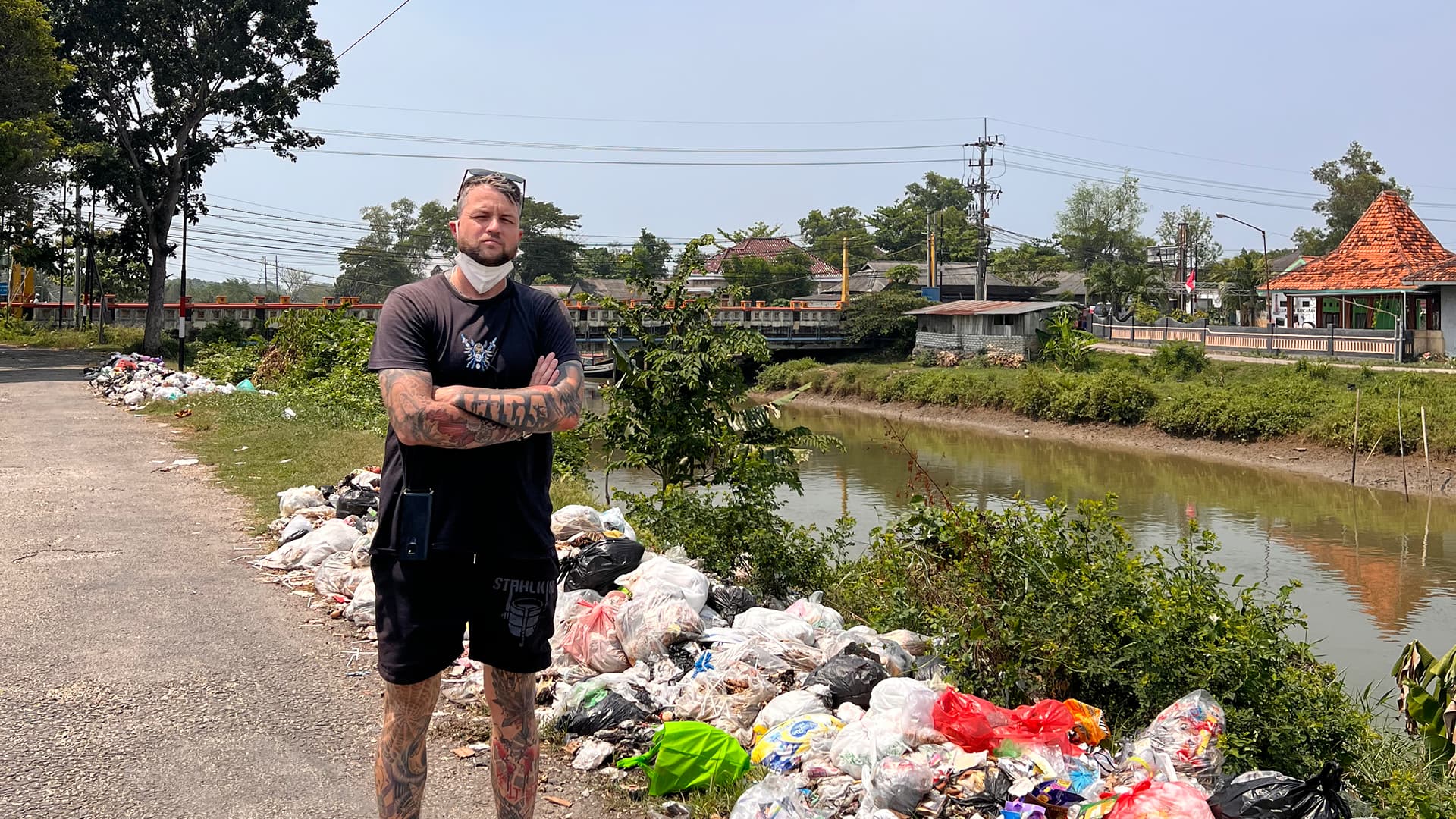
Banyak pekerja di sektor persampahan berasal dari pulau ini. Tapi ironisnya, pulau ini masih termasuk salah satu yang paling kotor. Madura di Indonesia dikenal sebagai tempat asal para pekerja sampah—baik itu pengepul maupun pemulung. Tapi kenapa Madura masih kotor? Karena plastik yang tidak bernilai jual masih mendominasi pasar, dan bahkan Madura yang terkenal dengan pengelolaan sampahnya pun belum punya solusi untuk masalah ini.
Ikuti Veritas Edukasi Lingkungan kalau kamu ingin tahu bagaimana cara memperbaikinya.
Caption:
Madura: tulang punggung pengumpulan sampah di Indonesia—namun justru tenggelam dalam polusi plastik. Kenapa?
Pulau ini menjadi pusat bagi banyak pemulung dan pengepul sampah di seluruh Indonesia. Mereka adalah “mesin tak terlihat” yang menjaga roda ekonomi daur ulang tetap berjalan.
Tapi di kampung halaman mereka sendiri? Madura masih menjadi salah satu wilayah paling tercemar di negeri ini.
Kenapa komunitas yang berperan besar dalam solusi sampah justru hidup di tengah tumpukan sampah? Karena sistemnya memang bermasalah.
👉 Plastik bernilai rendah dan tidak bisa didaur ulang masih mendominasi pasar lokal.
👉 Para pemulung tidak bisa menghasilkan uang dari jenis sampah ini—jadi dibiarkan begitu saja.
👉 Tidak ada infrastruktur resmi untuk menangani sampah yang tidak bisa dijual.
Para pekerja sampah dari Madura membersihkan masalah semua orang, tapi tidak ada yang membersihkan Madura.
Ini bukan soal kurangnya usaha. Ini soal kurangnya penciptaan nilai dalam sistem yang ada, dan kurangnya keterlibatan mereka dalam solusi yang didanai.
Di Veritas Edukasi Lingkungan, kami percaya bahwa solusi nyata untuk masalah sampah harus melibatkan mereka yang selama puluhan tahun menopang sistem ini—sektor informal. Dan kami juga percaya bahwa pulau seperti Madura layak mendapatkan kondisi yang lebih baik.
Pelajari lebih lanjut tentang inisiatif berdampak kami, hubungi kami di info@vel.earth
---
Many waste workers come from this island, yet it remains one of the most polluted places in Indonesia. Madura is widely known as the home of waste pickers and aggregators—key players in the recycling chain. So why does the problem persist? Because low-value, non-recyclable plastics still dominate the market, and even in a place recognized for its role in waste management, there is still no clear solution.
Follow Veritas Edukasi Lingkungan to learn how this can be addressed.
Caption:
Madura: the backbone of Indonesia’s waste collection system—yet overwhelmed by plastic pollution. Why?
This island is home to countless waste pickers and aggregators across the country. They are the invisible engine powering our recycling economy.
But in their own communities? Madura remains one of the most polluted regions in Indonesia.
Why do the very people who sustain our waste solutions still live surrounded by waste? Because the system is fundamentally broken.
👉 Low-value, non-recyclable plastics dominate local markets.
👉 Waste pickers cannot generate income from them—so they are left behind.
👉 There is no formal infrastructure to manage waste that has no market value.
Madura’s waste workers help clean up the rest of the country, yet no one is cleaning up Madura.
This is not a matter of effort—it is a matter of value creation within the system, and a lack of inclusion in the solutions being funded.
At Veritas Edukasi Lingkungan, we believe that real solutions must include those who have sustained this system for decades—the informal sector. And we believe that islands like Madura deserve better.
To learn more about our initiatives, contact us at info@vel.earth

Deborah Kezia
|
Media Coverage
4 months ago
